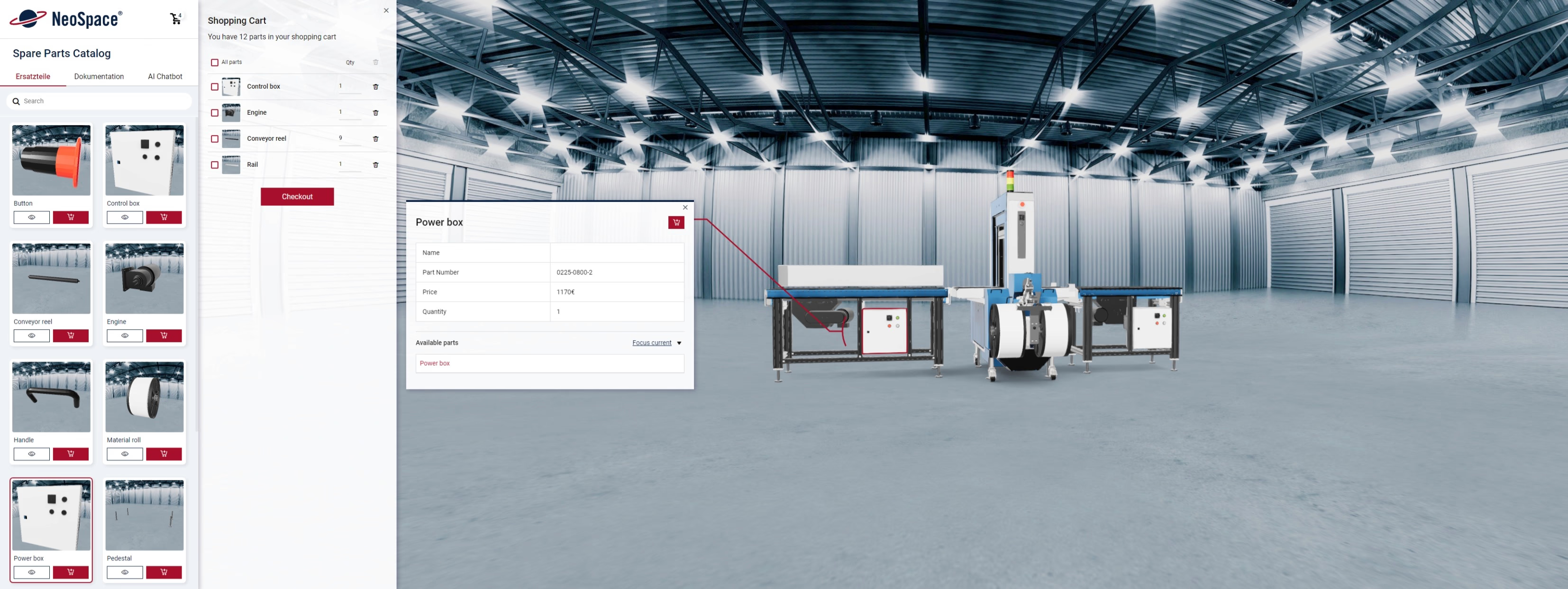
Snapshot
Role: Lead UX/UI Designer
Scope: Product strategy, UX architecture, interaction design, and visual system
Platform: Web-based 3D catalog system integrated with NeoSpace
Domain: Industrial product documentation, parts lookup, and ordering
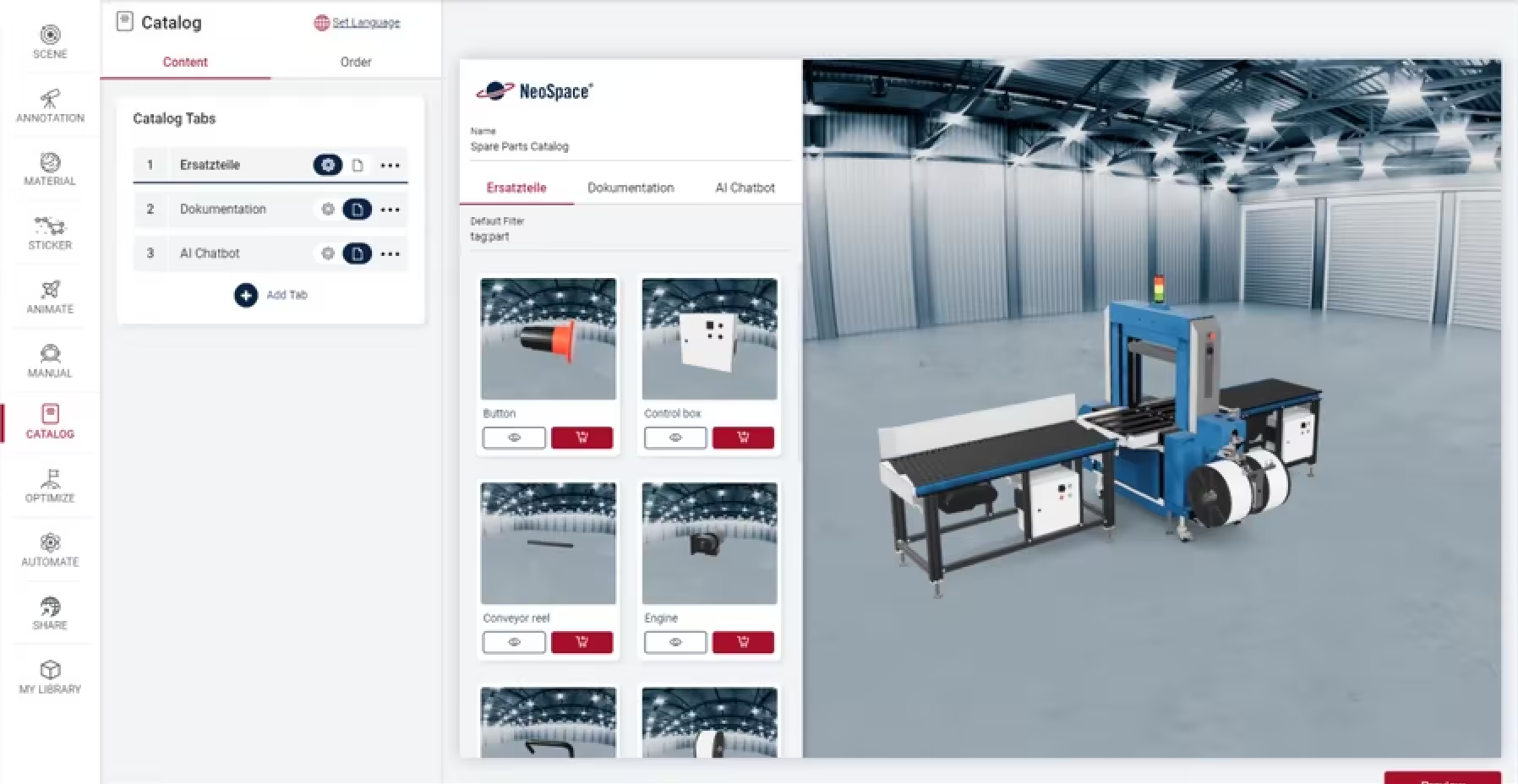 Adding Parts | 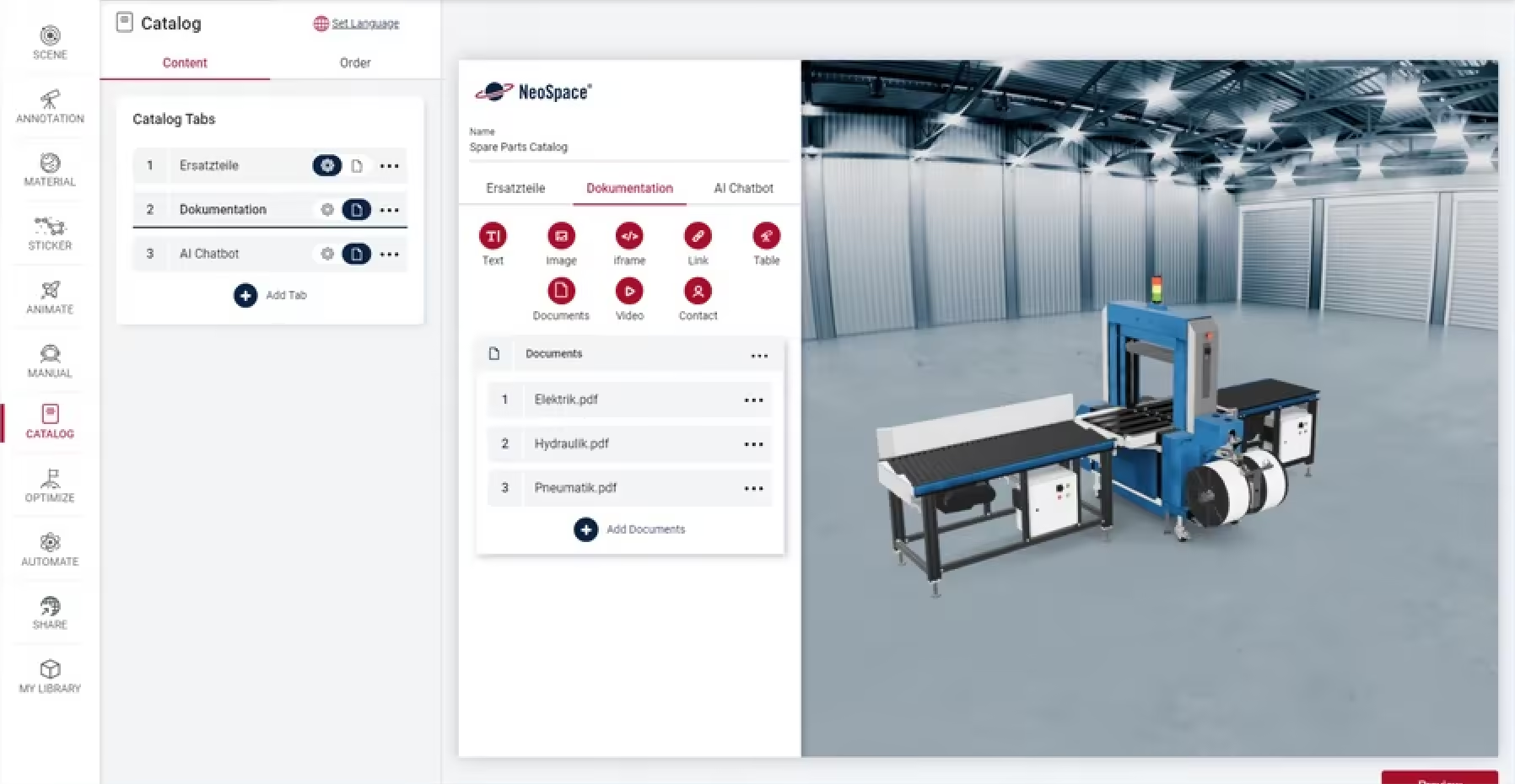 Adding Documentation |
Business Context
NeoSpace is a desktop application that allows users to enrich 3D models with materials, animations, and annotations while preparing them for web-based use cases.
As the platform matured, a new opportunity emerged: enabling customers to transform complex product data into interactive 3D catalogs that could support exploration, documentation, and part ordering.
Traditional industrial catalogs often rely on static diagrams and complex part numbers, which can slow down technicians, increase ordering errors, and create support overhead.
The goal of the 3D Catalog Creator module was to allow organizations to publish interactive catalogs where users could visually explore products, understand assemblies, and identify parts directly within a 3D environment.
Strategic Tension
Designing the catalog system required balancing several competing requirements:
- Technical accuracy — assemblies and part relationships had to remain precise
- Usability — the experience needed to work for both engineers and non-technical users
- Performance — complex 3D models needed to remain responsive across devices
- Integration — the system had to connect with backend systems and e-commerce workflows
The challenge was to transform dense engineering documentation into an interactive exploration experience without sacrificing precision.
Organizational Constraints
- The new module had to integrate with the existing NeoSpace ecosystem
- Many users worked with large and complex CAD-derived models
- The solution needed to support web delivery across multiple devices
- Catalogs needed to connect with backend product databases and ordering systems
The design needed to extend the platform while preserving the workflows existing users relied on.
Strategic Leadership
Reframing Catalogs as Interactive Exploration
Rather than replicating traditional documentation formats, I designed the experience around visual product exploration.
Key capabilities included:
- Interactive 3D part inspection
- Hierarchical assembly navigation
- Visual part highlighting and selection
- Direct contextual information and metadata
This allowed users to locate parts through spatial understanding rather than memorizing part numbers.
Reducing Errors Through Visual Identification
A core objective was reducing ordering mistakes caused by ambiguous diagrams or incorrect part references.
To address this, the system introduced:
- Contextual highlighting of selected components
- Clear part relationships within assemblies
- Visual confirmation before initiating ordering actions
This made part identification significantly more reliable.
Designing for Cross-Platform Performance
Industrial models can be extremely heavy, so maintaining responsiveness was critical.
The experience was designed around:
- Optimized model loading strategies
- Progressive interaction states
- Responsive layout patterns across devices
This ensured catalogs remained usable across desktop, tablet, and web environments.
Establishing a Scalable Catalog Framework
The catalog creator was not designed as a one-off publishing tool.
Instead, it established a repeatable structure for:
- Creating interactive product catalogs
- Connecting product data with visual documentation
- Supporting sales, service, and training workflows
This positioned the catalog module as a foundational capability within the NeoSpace platform.
Systems Thinking
The catalog system connected several layers of the product ecosystem:
- CAD-derived 3D product models
- Product data and metadata systems
- Documentation and training workflows
- E-commerce ordering infrastructure
By combining these layers, the platform turned static product documentation into a dynamic product exploration system.
This expanded the platform’s value across engineering, support, and sales teams.
Outcomes
Following release, the catalog system produced measurable operational improvements:
- Significant reduction in misidentified part orders
- Faster technician workflows through direct visual lookup
- Fewer support tickets related to part compatibility and identification
- Positive customer feedback on clarity and usability
The system helped organizations move away from static documentation toward interactive product understanding.
Organizational Impact
- Expanded NeoSpace from a model preparation tool into a documentation platform
- Reduced operational friction for service teams and customers
- Enabled new use cases across sales, training, and support
By translating complex engineering documentation into an intuitive visual system, the 3D Catalog Creator made product knowledge easier to access, understand, and act on.