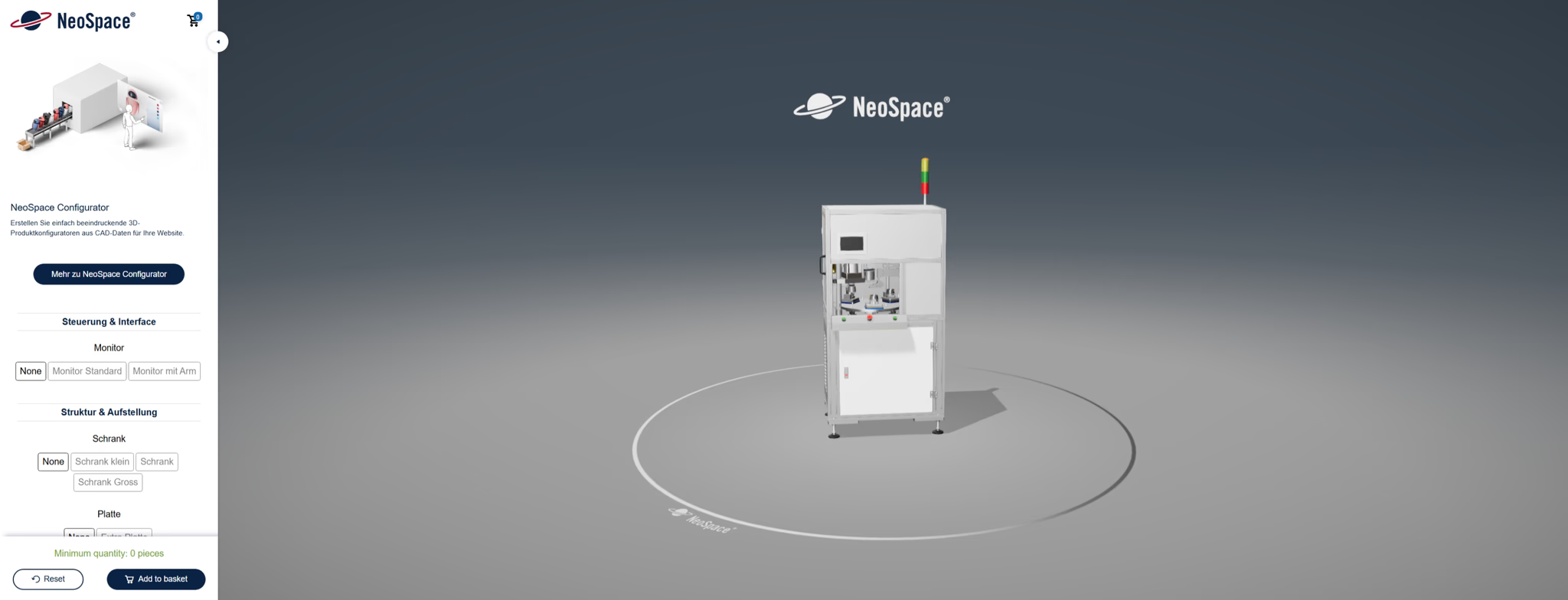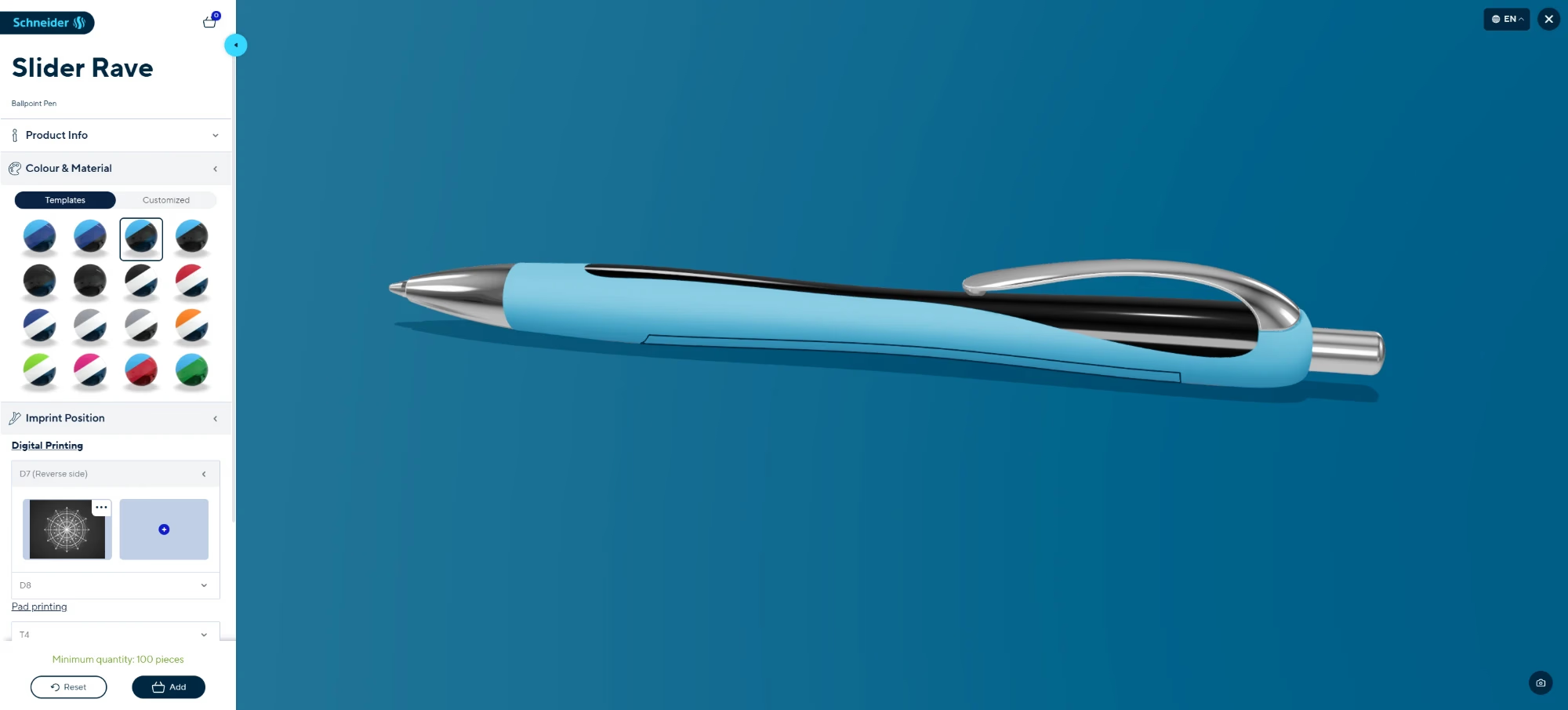
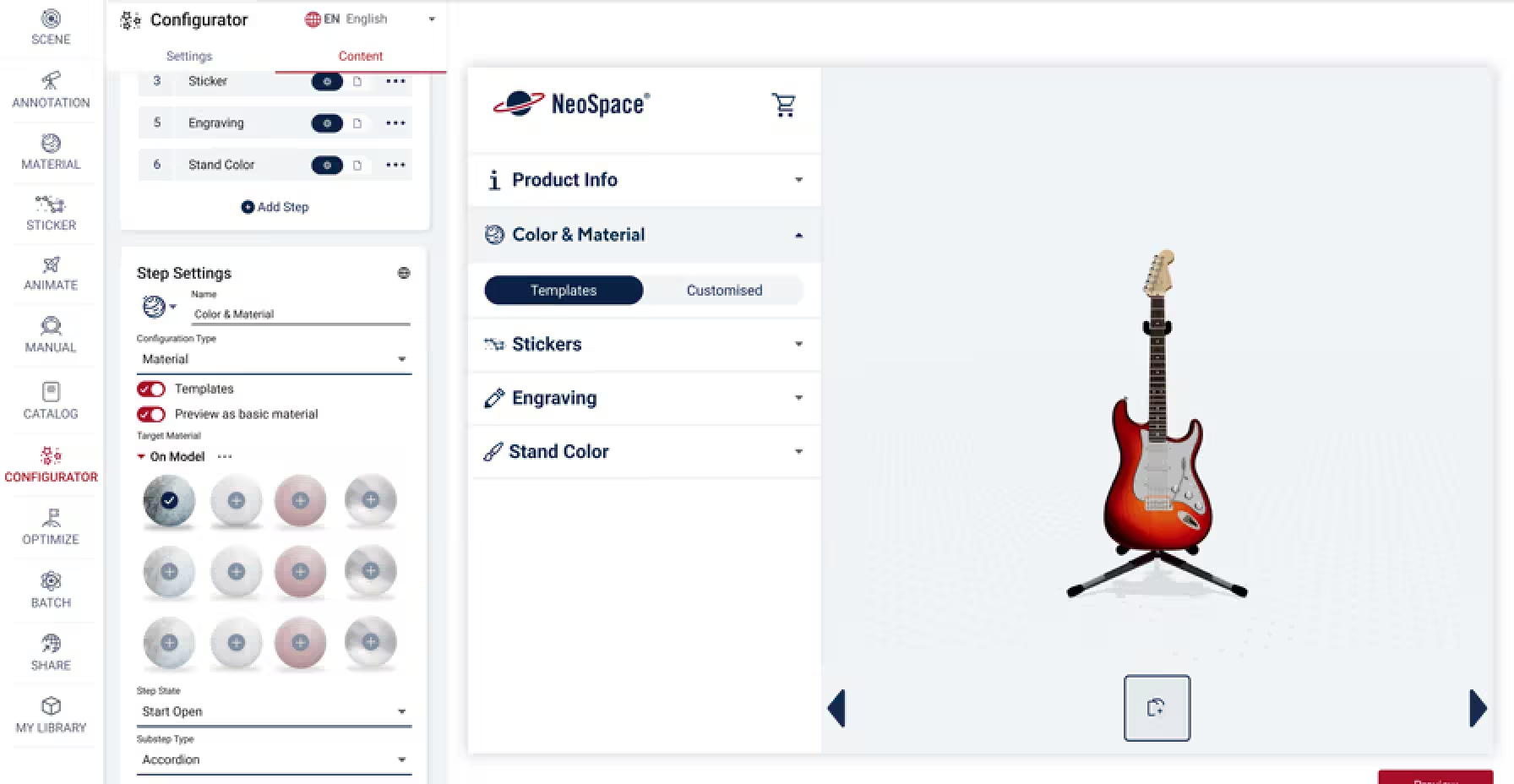
Snapshot
Role: Sole Product Designer
Scope: End-to-end product strategy, UX architecture, interaction design, visual system
Platform: Web-based 3D configurator integrated into NeoSpace ecosystem
Domain: Complex technical B2B products
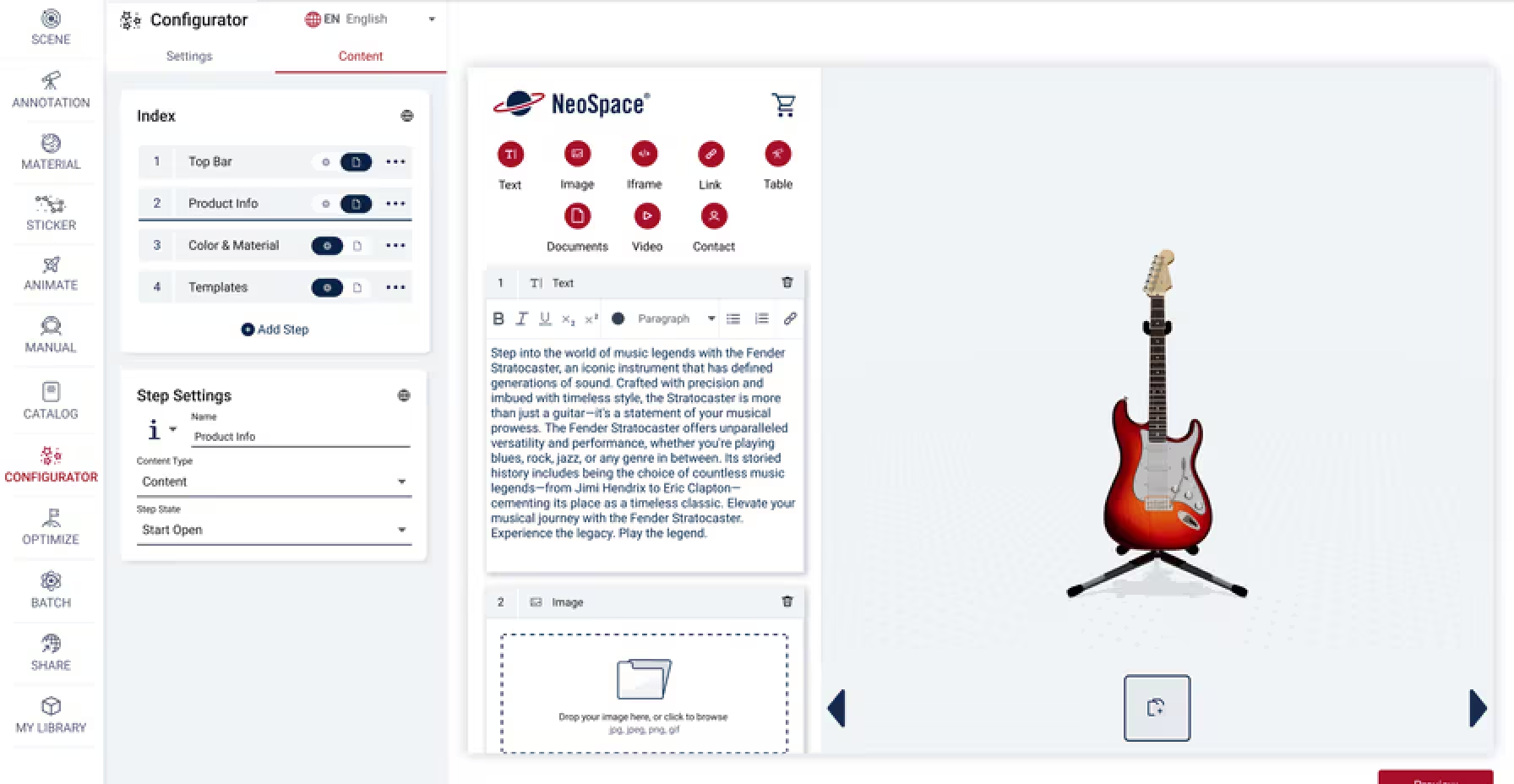
![]() Building Configuration | ![]() Building Content |
Business Context
INNEO needed to evolve its NeoSpace ecosystem by introducing a web-based 3D Product Configurator capable of handling highly complex, rule-driven products.
The commercial objective was clear:
- Reduce friction in complex configuration workflows
- Increase conversion through real-time visualization
- Enable customers to embed configurators within their own ecosystems
- Strengthen sales channel performance
The risk: technical depth and configuration complexity were limiting usability, slowing adoption, and constraining growth.
This was not a UI refresh. It was a product maturity shift.
Strategic Tension
The initiative sat between three competing forces:
- Technical constraint — Layered configuration rules and dependencies
- User expectation — Immediate, intuitive interaction
- Commercial pressure — Measurable impact on revenue and retention
The core challenge was translating technical complexity into clarity — without oversimplifying or compromising system integrity.
Organizational Constraints
- Sole designer leading UX strategy and execution
- Heavy reliance on backend systems and 3D rendering pipelines
- Required interoperability with sales and CRM tools
- Users ranged from technical specialists to business stakeholders
Design decisions had to respect engineering realities while raising the product’s usability standard.
Strategic Leadership
Defining the Experience Direction
I established guiding principles early to align engineering and business:
- Complexity should be structured, not exposed
- Every configuration action must produce visible, immediate feedback
- Validation and constraints should educate, not block
- The system must scale beyond a single product use case
These principles anchored decision-making and reduced cross-functional friction.
Re-architecting the Configuration Model
Instead of designing around system logic, I restructured the experience around user intent.
Key shifts included:
- Moving from feature-first navigation to goal-driven flows
- Introducing progressive disclosure to reduce cognitive overload
- Designing configuration sequences to mirror real-world decision processes
- Making system constraints visible and understandable in context
This reduced confusion while preserving technical accuracy.
Designing Real-Time Cause-and-Effect Interaction
The differentiator was not the 3D model itself — it was interaction clarity.
I focused on:
- Immediate visual feedback for every configuration change
- Clear communication of dependencies and invalid states
- Eliminating hidden system logic that created uncertainty
- Refining error and validation patterns to feel assistive rather than restrictive
The result was a configuration experience that felt responsive and controlled, rather than procedural.
Establishing a Scalable Visual System
Beyond solving the immediate problem, I designed a reusable interaction and visual foundation:
- Defined consistent system states across the configurator
- Developed a cohesive visual language aligned with NeoSpace
- Created documentation to support future configurator implementations
This positioned the configurator as a platform capability, not a one-off feature.
Systems Thinking
The configurator functioned as a bridge across multiple systems:
- Real-time 3D rendering
- Configuration logic and validation engines
- Backend infrastructure
- Sales and customer-facing workflows
Several reinforcing loops drove impact:
Engagement Loop
Real-time feedback → Increased exploration → Higher interaction depth → Improved conversion
Personalization Loop
Customization control → Stronger product ownership → Increased retention
Ecosystem Loop
Backend integration → Reduced sales friction → Increased channel traffic
Design decisions were evaluated not only for usability, but for their influence on these system dynamics.
Outcomes
Within the first year of launch:
- 35% increase in YoY revenue
- 25% increase in user satisfaction and retention
- 84% increase in overall sales channel traffic
The configurator strengthened existing subscriber relationships while materially contributing to new revenue growth.
Organizational Impact
- Elevated UX maturity within a technically driven organization
- Shifted internal perception of design from interface execution to product strategy
- Established a scalable framework for future configurable offerings
Leading this initiative required operating across strategy, systems architecture, interaction design, and execution.
The result was not simply a better interface — it was a measurable improvement in how complexity translates into commercial value.